80/20 vs 100% Cotton Fleece: Which Is Right for Your Hoodie?
80/20 cotton-polyester or 100% cotton fleece for custom hoodies? Compare feel, shrinkage, pilling, lint and GSM from 250 to 500.
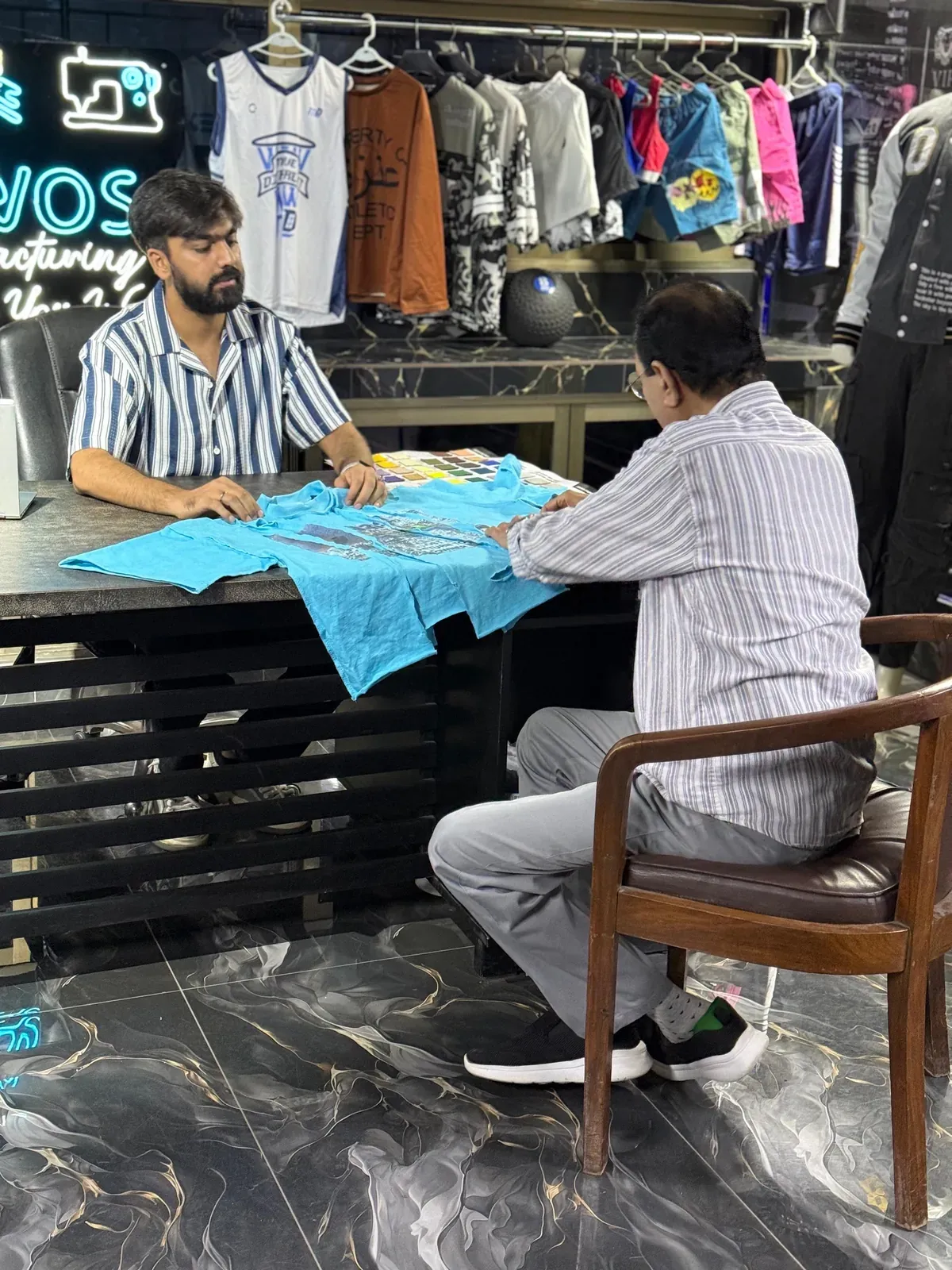
If you are choosing fabric for custom hoodies, two cotton-rich options come up often: 100% cotton and an 80/20 cotton-polyester blend. Neither is simply "better quality". They behave differently in feel, shrinkage, pilling and care, and the right one depends on your brand and customer. This guide explains the differences honestly, including where lint and pilling really come from.
What we offer
At AVOS Enterprises, our fleece and terry fabrics come in two compositions: 100% cotton and 80% cotton / 20% polyester. Both are available in cotton fleece and cotton terry, in weights from 250 to 500 GSM. Exact availability for a given weight and blend is confirmed against your project when we quote.
In this article, 80/20 means 80% cotton and 20% polyester. In parts of the trade, polyester-cotton blends are written polyester-first, so always confirm the full composition in writing, for example "80% cotton / 20% polyester".
What the 20% polyester changes
Polyester adds strength, dimensional stability and quicker drying. Cotton adds softness, absorbency and breathability. Adding a modest 20% of polyester keeps the fabric cotton-led while shifting some properties.
| Property | 100% cotton | 80/20 cotton-polyester |
|---|---|---|
| Feel | Fully natural cotton hand | Very close to cotton, slightly more structure |
| Breathability and absorbency | Highest | High, slightly reduced |
| Shrinkage potential | Highest, needs pre-treatment and pattern allowance | Generally lower than 100% cotton |
| Shape retention | Depends on knit and finishing | Generally better |
| Drying | Slower | Somewhat quicker |
| Brand story | Pure cotton | Cotton-rich blend |
These are general tendencies. Real results depend on yarn, knit construction, brushing and finishing, so judge by a sample, not by the label alone.
Pilling and lint: no simple winner
People often mix these up, but they are different problems:
- Pilling is small balls of fibre that form on the surface after wear and washing.
- Lint is loose fibre that sheds, often most noticeable on brushed fleece when it is new.
Cotton fibres are relatively short and can shed. Polyester fibres are strong and can hold on to a pill instead of letting it break away. Published guidance therefore disagrees about which blend pills or sheds more. What matters at least as much as fibre content is the quality of the yarn (fibre length and twist), how tightly the fabric is knitted, how the inside is brushed and how it is finished. A well-made fabric in either composition can outperform a poorly made one in the other. We would be cautious about anyone who says one composition always sheds or pills more.
Where does 65/35 fit?
You will often see 65/35 cotton-polyester quoted elsewhere in the market. It contains more polyester, so it tends to shrink less and hold its shape well, with a somewhat drier hand and, depending on the fabric, different pilling behaviour. It is a legitimate choice, not an inferior one, and it is not part of our current blend range, which is 80/20 and 100% cotton. If your product genuinely needs a different ratio, ask us whether it is feasible for your project.
Quality is not the blend, and not the weight
Composition tells you what the fabric is made of. GSM tells you how heavy it is. Neither tells you how good it is. Quality comes from yarn, construction, brushing, finishing, pre-treatment and the way the garment is made. Read our post on fleece vs French terry hoodies for the construction difference.
Choosing a GSM from 250 to 500
As a general guide, not a rule:
- Around 250-320 GSM: lighter hoodies and sweatshirts, easier for layering and milder seasons.
- Around 320-400 GSM: mid-weight everyday hoodies.
- Around 400-500 GSM: heavyweight hoodies with a substantial feel, common in premium streetwear.
Higher GSM means more fabric mass, not automatically better fabric. Ask for a sample in your target weight. See our cotton fleece guide and French terry guide.
Which should you choose?
- 100% cotton suits brands whose story is pure natural fibre, or customers who want maximum breathability. Plan for shrinkage with pre-treatment and pattern allowance.
- 80/20 suits brands that want a cotton-like feel with a little extra stability and lower shrinkage potential.
If you are undecided, order a sample of each at the same GSM and wash-test them yourself.
Decoration
Both compositions can be decorated, but polyester content can affect ink and temperature choices in screen printing, for example to manage dye migration on some colours. Feasibility is confirmed per garment. See our guide to screen printing vs DTF for hoodies.
What to ask before you choose
- What is the exact composition, written as percentages?
- Is it fleece or terry, and at what GSM?
- What shrinkage should I plan for, tested at the wash on my care label?
- Can I have a physical sample to inspect and wash?
- How will my print or embroidery behave on this fabric?
Working with AVOS
You share your design and specification, we confirm feasibility and quotation, develop a sample (typically around 7-10 days depending on the product), and you approve it before bulk production. MOQ is commonly 50 pieces and varies by product, fabric and customisation. We do not publish lab test results here, and we recommend judging fabric by the sample. See our MOQ guide and manufacturing process.
Frequently asked questions
Is 80/20 better quality than 100% cotton?
Not automatically. 80/20 usually shrinks less and holds shape better, while 100% cotton offers a purely natural feel. Quality depends on yarn, knit and finishing.
Which one gets more lint?
It varies. Lint on brushed fleece depends on fibre length, yarn twist and finishing, not only on composition. Check a sample.
Does 80/20 shrink less than 100% cotton?
Generally yes, because polyester stabilises the fabric, but pre-treatment and finishing also matter. Confirm shrinkage on your sample.
What GSM ranges do you offer?
Cotton fleece and cotton terry are available from 250 to 500 GSM, confirmed per project.
Why is 65/35 popular elsewhere?
Its higher polyester share lowers shrinkage and cost for volume programs. It is a trade-off, not a quality grade.
Choose your hoodie fabric with us
Tell us the hoodie you have in mind, your target weight and your quantity and we will discuss fabric selection and product development. Request a quote to start.
Ready to make it?
Configure your product and get an instant estimate — or talk to us about your idea.
Request a Quote